


Every successful roof replacement begins with proper demolition. Before Montana Pro Contractors could install the new architectural asphalt shingle roofing system at Wheat Suites in Bozeman, Montana, our crew completed a full roof tear-off to expose the existing roof deck and prepare the building for its new roofing assembly. While demolition may appear straightforward, it is one of the most important phases of any roofing project because it allows hidden issues to be identified and corrected before new materials are installed. The Wheat Suites roof demolition provided an opportunity to inspect the structural deck, remove aging roofing materials, evaluate flashing conditions, and prepare a clean foundation for the next stages of construction. By removing the roofing system down to the deck, Montana Pro Contractors ensured the new roof would be built on a stable and properly prepared substrate designed for long-term performance.
Commercial Roof Demolition
Wheat Suites | Bozeman, Montana
Removing the Existing Roofing System for a Complete Roof Replacement


Bozeman, Wheat Suites - Roof Demolition Process
Beginning the Tear-Off Process
The demolition process began with the removal of the existing architectural asphalt shingles. Roofing crews carefully worked across the roof surface using specialized tear-off tools to separate weathered shingles from the underlying roofing assembly. As shingles age, they can become brittle and increasingly difficult to remove, making proper demolition techniques essential for maintaining efficiency while protecting the roof deck below. Throughout the project, large sections of roofing material were systematically removed to expose the underlying layers of the roofing system. This process allowed our team to evaluate the condition of the roof and prepare the building for a complete exterior renovation.
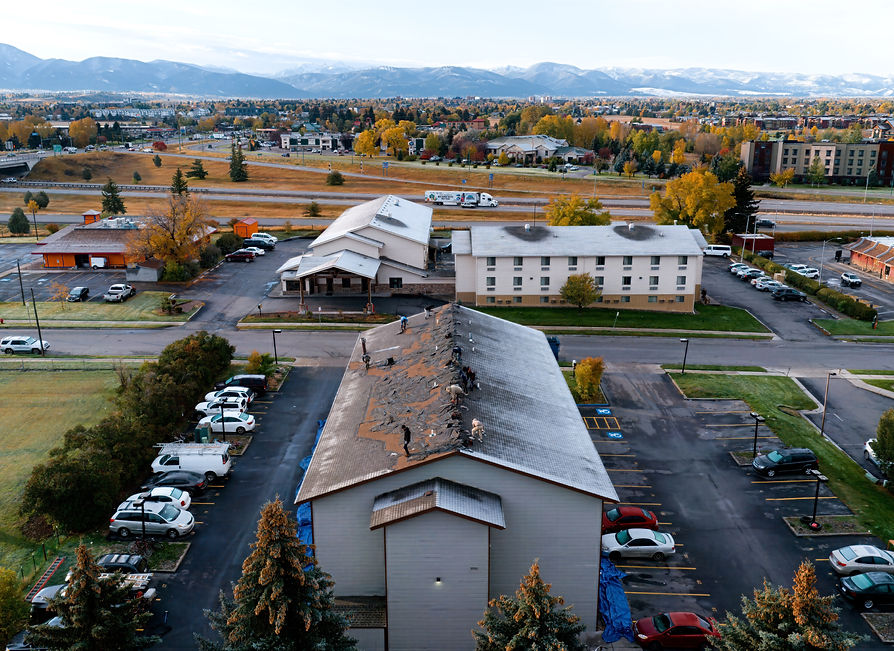
A View of Bozeman and a New Beginning
The demolition process also provided unique views across Bozeman and the surrounding Gallatin Valley. From the roof of Wheat Suites, the project highlighted not only the scale of the renovation but also the environment that the completed roofing system would be designed to withstand. High winds, heavy snow loads, hail, and rapid weather changes are all part of life in Southwest Montana. Every step of the demolition process was completed with these conditions in mind, ensuring the new roofing system would be built to perform in one of Montana's most demanding climates.
Montana Winters and Roofing Conditions
One of the unique aspects of this project was working through Montana's changing weather conditions. During portions of the demolition process, frost covered sections of the roof surface, highlighting the environmental challenges that roofing systems face throughout the Gallatin Valley. Bozeman experiences significant temperature fluctuations, heavy snowfall, and prolonged winter conditions that place tremendous stress on roofing materials over time. These freeze-thaw cycles contribute to the gradual deterioration of shingles, flashing systems, and roofing components, reinforcing the importance of replacing aging roofs before leaks and structural issues develop. The presence of frost during demolition serves as a reminder of why durable roofing systems and professional installation are so important for commercial and multi-family properties throughout Montana.

Removing Ridge Components and Roofing Details
As demolition continued, our crew carefully removed the existing ridge materials and roofing components located at the highest points of the roof system. Ridge areas are critical parts of any roofing assembly and often reveal how well a roofing system has performed over time. Removing ridge materials allowed Montana Pro Contractors to inspect ventilation details, evaluate previous installation practices, and prepare these important transitions for the new roofing system. Proper preparation at ridges, hips, and roof transitions helps ensure the finished roof delivers superior waterproofing performance and long-term durability.

Removing Old Flashing Systems
Flashing is one of the most important waterproofing components of any roof. During demolition, our team carefully worked beneath existing flashing assemblies to remove aging materials and expose the underlying roof structure. Over time, flashing can deteriorate, loosen, or become compromised by weather exposure and building movement. Removing the old flashing provided an opportunity to inspect vulnerable areas and prepare the roof for new flashing systems that would be integrated into the completed roofing assembly. Replacing outdated flashing is a critical step in preventing future leaks and ensuring the new roofing system performs as a complete weather-resistant barrier.

Extracting Old Nails and Staples
One often-overlooked aspect of roof demolition is the removal of existing fasteners. As the old roofing system was removed, Montana Pro Contractors carefully extracted nails, staples, and other fastening materials embedded in the roof deck. Leaving old fasteners behind can create irregularities beneath new roofing materials and interfere with proper installation. Removing these components helps create a smooth, clean surface for underlayment and shingles while improving the overall quality of the finished roofing system. Attention to these details is one of the reasons professional roof replacements consistently outperform roofing systems installed over improperly prepared substrates.

Inspecting the Roof Deck
Once the existing roofing materials, flashing, and fasteners were removed, the roof deck became fully visible for inspection. This stage is one of the most valuable benefits of a complete roof tear-off because it allows roofing professionals to identify hidden moisture damage, structural concerns, or substrate issues before new materials are installed. Beginning with a clean and structurally sound roof deck is essential for maximizing the lifespan and performance of the new architectural asphalt shingle roofing system. Any necessary repairs can be completed before underlayment and shingles are installed, creating a stronger and more durable roofing assembly. Leaving old fasteners behind can create irregularities beneath new roofing materials and interfere with proper installation. Removing these components helps create a smooth, clean surface for underlayment and shingles while improving the overall quality of the finished roofing system. Attention to these details is one of the reasons professional roof replacements consistently outperform roofing systems installed over improperly prepared substrates.

Preparing for the Next Phase
With demolition complete, Wheat Suites was ready for the next stage of construction. The roof deck had been exposed, inspected, cleaned, and prepared for installation of the new roofing system. Proper demolition laid the foundation for everything that followed, including dry-in protection, premium underlayment, architectural asphalt shingles, LP SmartSide siding, and seamless gutter installation. By taking the time to properly remove the existing roof and prepare the structure, Montana Pro Contractors ensured the completed project would provide superior durability, improved weather protection, and long-term performance for years to come. Montana Pro Contractors — Covering Western Montana. Beginning with a clean and structurally sound roof deck is essential for maximizing the lifespan and performance of the new architectural asphalt shingle roofing system. Any necessary repairs can be completed before underlayment and shingles are installed, creating a stronger and more durable roofing assembly. Leaving old fasteners behind can create irregularities beneath new roofing materials and interfere with proper installation. Removing these components helps create a smooth, clean surface for underlayment and shingles while improving the overall quality of the finished roofing system. Attention to these details is one of the reasons professional roof replacements consistently outperform roofing systems installed over improperly prepared substrates.